
 Reviews
Can a Chiropractor Help Piriformis Syndrome?
A chiropractor can be one part of conservative care for piriformis syndrome, but it is not the only part, and the first step is confirming that the piriformis muscle is actually the problem. Piriformis syndrome is deep buttock pain, often worse with sitting, that comes from the piriformis muscle irritating the sciatic nerve.
If you sit most of the day, drive a lot, or have been told your sciatica “doesn’t show up on the MRI,” this page is for you. It covers what the condition is, how it differs from spine-related sciatica, what chiropractic care does and does not have evidence for, stretches that are worth trying first, and when to get help quickly.
What is the piriformis muscle?
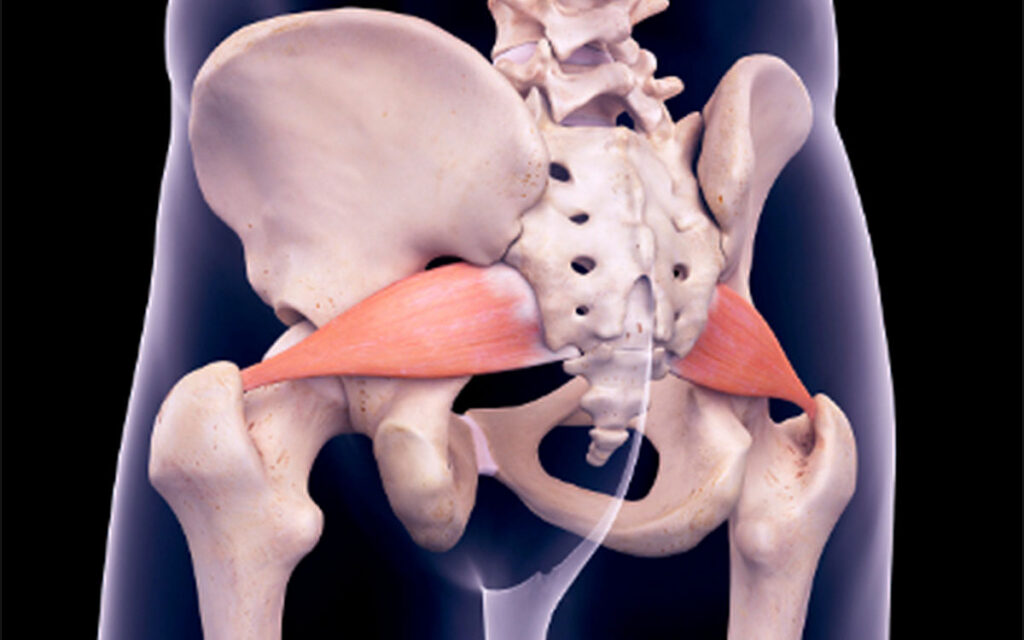
The piriformis is a small, flat muscle deep in the buttock. It runs from the base of the spine (the sacrum) to the top of the thigh bone and helps rotate the hip outward. The sciatic nerve passes right beside it, and in a minority of people it passes through or splits around the muscle. Researchers report that this variation shows up in about 16% of healthy people too, so having it does not by itself explain pain.
What is piriformis syndrome?
Piriformis syndrome is thought to occur when the piriformis muscle becomes tight, inflamed or in spasm and irritates the sciatic nerve. It is a form of sciatica, but not the most common one. A medical review describes it as relatively uncommon but not insignificant, and notes that the diagnosis is hard because many conditions of the low back and buttock cause similar symptoms.
The most common symptoms are:
- Deep, aching buttock pain, usually on one side.
- Pain that is worse after sitting for a long time, such as at a desk or on a drive.
- Tenderness when you press on the buttock.
- Pain, tingling or numbness that can reach the back of the thigh.
Long periods of sitting, repeated deep squatting or lunging, and a fall onto the buttock are common triggers. How often it occurs depends on how it is defined: one review estimates about 5% to 6% of low back, buttock and leg pain cases, while another reports a range of 0.3% to 6% of low back pain.
Piriformis syndrome vs. sciatica from the spine
Both can cause buttock pain, and they can occur together. These patterns help tell them apart, though only an examination can confirm which you have:
- More typical of piriformis: pain mostly in the buttock and upper thigh, aggravated by sitting, and little or no low back pain.
- More typical of the spine: pain that travels below the knee, comes with low back pain, or is set off by bending, coughing or sneezing.
There is no single test that confirms piriformis syndrome, so it is usually diagnosed by history and examination after other causes are considered. For the spine-related version, read our guide to sciatica and buttock pain.
How chiropractic care may help
Chiropractic care for piriformis syndrome is generally part of a conservative plan, not a stand-alone cure. Depending on what the examination shows, it can include:
- Spine and pelvis assessment and adjustment. The lower back, sacrum and hip share a lot of muscle attachments. If joints there are moving poorly or sitting out of alignment, the piriformis may be working under extra strain. Correcting that is meant to reduce the load on the muscle.
- Soft tissue work. Hands-on release of the glute muscles can ease tension and help you tolerate stretching.
- Stretching and strengthening. A routine tailored to you, focused on the hip and glute muscles that support the pelvis.
- Ergonomic and movement changes. Practical changes to how you sit, drive and exercise so the problem does not return.
On the evidence, be realistic. Reviews of piriformis syndrome describe conservative care as the usual starting point, and the published chiropractic literature is mostly individual case reports, not large controlled trials. We say this plainly because you should expect any provider to explain how they will measure your progress. At Koru, care begins with measurement: a history, a neurological and structural examination, and on-site imaging when it is warranted, followed by re-testing so you can see whether things are changing.
Stretches and habits to try first
If your symptoms are mild and you have no red flags, these are reasonable to start with. Move slowly. A stretch should feel like a deep pull in the glute. Stop if you feel sharp pain, tingling or numbness spreading down the leg.
Seated piriformis (figure-four) stretch
How to: Sit on the floor or a bed with both legs straight in front of you and your back tall. Bend one knee and cross that foot over the opposite leg, placing the foot on the outside of the straight knee. Gently pull the bent knee toward your chest, keeping your spine straight. You should feel the stretch on the outside of the glute on the bent-knee side. Hold 30 to 60 seconds, rest, and repeat 2 to 4 rounds, then switch legs. Do this a few times a day.
Why it helps: It lengthens a muscle that stays shortened during long sitting and can take pressure off the nerve.
Pigeon stretch on a surface
How to: Find a bed or a surface about mid-thigh height. Place one foot up on it with the knee bent outward so the outside of that leg rests on the surface, and keep the other foot firmly on the floor. Slowly lean forward until you feel the stretch in the glute. Hold 30 to 60 seconds, then switch legs. Repeat morning and night, and during the day if needed.
Why it helps: Sitting leaves the hips and glutes stiff, and this stretch opens the hip and lengthens the glute muscles on the raised-leg side.
Break up sitting
Stand and move every 30 to 45 minutes. If you have a standing desk, alternate between sitting and standing every 45 to 60 minutes. If you drive for work, stop often enough to walk for a minute or two.
Lacrosse ball or massage gun
Rolling the glute on a lacrosse ball or using a massage gun can ease trigger points. Avoid pressing directly on the nerve if it sends tingling or shooting pain down the leg. Self-massage tends to give short-lived relief if the cause is a structural pattern that has not been addressed.
Other treatments your doctor may suggest
Conservative care is usually tried first, including physical therapy, activity changes, and anti-inflammatory medication or muscle relaxants when appropriate. If that does not help, medical options reported in the research include injections of local anesthetic, corticosteroid or botulinum toxin, and, rarely, surgery to release pressure on the nerve. Results from injections vary from person to person. Reviews describe surgery as an option only when conservative treatment has failed and symptoms significantly affect daily life.
When buttock pain needs urgent care
Go to the emergency room if you have numbness in the groin, genitals or inner thighs, new loss of bladder or bowel control, sudden or worsening leg weakness, pain after a fall or accident, or pain with fever. See a doctor soon if the pain is severe, wakes you at night, or has not started to improve after a few weeks.
Frequently Asked Questions
A chiropractor can be one part of conservative care for piriformis syndrome. That usually means checking whether the spine, pelvis and hip are moving and aligned normally, hands-on soft tissue work, and a stretching and movement plan. The published evidence for chiropractic care specifically is mostly case reports rather than large trials, so it is worth asking any provider how they will measure whether you are improving.
They overlap, and piriformis syndrome is itself a form of sciatica. The usual pattern is deep buttock pain that is worse with sitting and may reach the back of the thigh. Pain that travels well below the knee, or comes with low back pain, numbness or weakness, points more toward the spine. There is no single confirming test, so diagnosis is based on your history and an examination.
Estimates vary with the diagnostic criteria used. One review puts it at roughly 5% to 6% of cases of low back, buttock and leg pain, and another reports a range of 0.3% to 6% of low back pain. It is an uncommon but real cause of buttock pain, and it is often confused with other problems.
The seated figure-four stretch and the pigeon stretch on a bed or table are the two most commonly used. Hold each for 30 to 60 seconds, move slowly, and stop if the stretch sends sharp pain, tingling or numbness down the leg. Stretching should feel like a deep pull in the glute, not nerve pain.
Go to the emergency room for numbness in the groin or inner thighs, new loss of bladder or bowel control, sudden leg weakness, pain after a fall or accident, or pain with fever. See a doctor soon if the pain is severe, wakes you at night, or has not started to improve after a few weeks of stretching and moving more.
Koru Chiropractic is in Louisville, Colorado, and sees patients from Boulder, Broomfield, Lafayette, Erie and Superior. A visit starts with a conversation about your history and how the pain behaves. If you go further, the evaluation looks at your spine, pelvis and nerve function, with on-site imaging when it is needed
Related reading
- Sciatica: causes of buttock pain and what helps
- Sciatica and low back pain care in Louisville, CO
- NUCCA chiropractic and 3D CBCT imaging
Talk with a doctor at Koru
If stretching has not settled your buttock pain, a conversation is a reasonable next step. Start with a free consultation, which is a conversation about your history and whether our approach fits. No exam, testing or imaging is part of it. Use the form below to schedule a consultation.
Sources
Vij N, Kiernan H, Bisht R, et al. Surgical and Non-surgical Treatment Options for Piriformis Syndrome: A Literature Review. Anesth Pain Med. 2021;11(1):e112825. doi:10.5812/aapm.112825 (via PubMed)
Probst D, Stout A, Hunt D. Piriformis Syndrome: A Narrative Review of the Anatomy, Diagnosis, and Treatment. PM R. 2019;11 Suppl 1:S54-S63. doi:10.1002/pmrj.12189 (via PubMed)
Lo JK, Robinson LR. Piriformis syndrome. Handb Clin Neurol. 2024;201:203-226. doi:10.1016/B978-0-323-90108-6.00002-8 (via PubMed)