
 Reviews
Sciatica Pain in the Butt: Causes, Piriformis vs. Sciatica and What Helps
Sciatica pain in the butt is pain from an irritated sciatic nerve (or the nerve roots feeding it) that is felt in the buttock, usually on one side, and often travels down the back of the leg. A tight piriformis muscle can cause very similar buttock pain, so it matters which one you have.
Quick guide to buttock pain
- Likely sciatica: one-sided buttock pain that may run down the back of the thigh, often past the knee, sometimes with tingling or numbness and low back pain.
- Possible piriformis involvement: deep buttock pain that stays above the knee and worsens with long sitting or deep squats. See chiropractic and piriformis syndrome.
- Urgent: numbness between the legs, new bladder or bowel changes, or sudden leg weakness. Go to the emergency room.
Below is the full explanation, including what I see in the office and the stretches I suggest first.
Sciatica Pain
Sciatica can be one tough condition to deal with. Sciatica is a radiating pain typically starting in the glutes/buttocks and running down the back of the leg, typically past the knee and into the toes. It is sometimes but not always associated with low back pain. I’ve had it myself a few times so I can speak from first-hand experience, it hurts and is very distracting to your daily life!
Something to note is you can have radiating pain in other parts of your legs, which is a sign of possible irritation and pressure on the nerves in your lower spine. This is often confused for sciatica but is also known as neuropathy or radiculopathy. These conditions can be helped by my neurologically-based approach, but for today’s blog, I’m going to keep it focused specifically on Sciatica.
The sciatic nerve forms from the lumbosacral plexus which is a network of nerves that come off your spinal cord in your lower spine and once exited between the joints they join to form the largest and longest nerve in the body the sciatic nerve. Sciatica is very common, approximately 3 million people in the US get it every year and it is 3x more common in men than women although still common in women.

Sciatic pain can be caused by a mechanism other than spinal misalignments, arthritis, and disc bulging or herniation. Some people are born with a fairly common anatomical variance where the sciatic nerve runs through the piriformis muscle, instead of under the muscle. The problem with this is the muscles will get tightened with chronic sitting as well as intensive exercises like deep squats, this can squeeze down on the nerve, creating sciatic-like symptoms. The key difference is the pain typically will not travel below the knee. Many people have tight hamstrings and piriformis muscles so if this symptom sounds like your pain I’d start with these simple stretches. If the stretches help, keep at it daily until your sciatica goes away and keep on top of the stretches even after so it doesn’t come back.
“An ounce of prevention is worth a pound of cure” ~ Benjamin Franklin
However, I find the more common cause of chronic or reoccurring sciatica is due to spinal misalignments and the long-term effects of misalignments such as disc bulging and arthritis. The nerve roots are what branch off your spinal cord and run out between the vertebrae and travel throughout the body to control and coordinate all bodily functions. Don’t forget the nervous system is the master and commander of every other organ system in the body, it is the top of the hierarchy physiologically!

What happens is with traumas such as slips and or fall sports injuries, or microtraumas like sitting at a desk all day putting excessive postural stress on the spine the joints become misaligned and fixated which results in a loss of range of motion, tight and achy muscles, sometimes spasms, and often nerve pain. This is what it looks like on an x-ray.
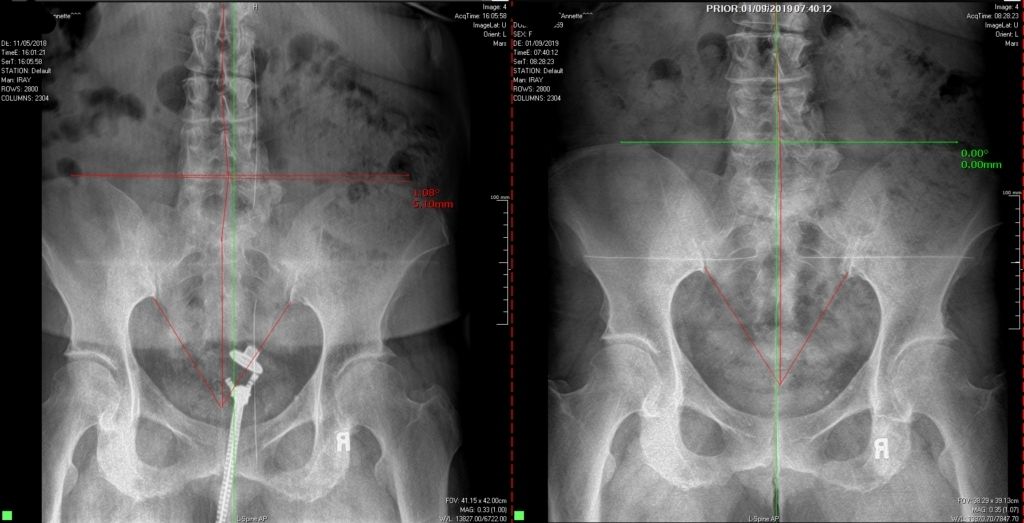
You can see the image on the left I have to outline the spine in red and the green is where that red line should be. After going a gentle and specific adjustment, with no twisting, popping, or cracking required I usually take another x-ray to make sure we are making legitimate structural changes. The x-ray on the right is the ‘after.” Their spine is not “perfect” but the realignment we did eliminate the sciatic and low back pain completely, even though they have arthritis and disc bulging. They also slept better after that of course and saw an immediate improvement in their quality of life.
Sciatica can be a real pain in the butt if you don’t know how to effectively manage it. As I mentioned above if you or a loved one is struggling with sciatica they should try the stretches first. If those don’t work I would recommend a functional neurological evaluation to see how your spinal nerves are functioning and if there is any irritation to them, this is how we evaluate all of our prospective new patients to make sure they are good candidates for our type of chiropractic care. Especially in un-resolving cases where patients have tried massage, stretches, physical therapy acupuncture, we oftentimes find out the greatest successes, simply because we are looking at the spine, your health, and your body through a totally different lens than other approaches, even other chiropractors.
Also, don’t forget to do your Spinal Hygiene Exercises every day to keep those joints and discs healthy. You can grab the videos for free here. Or if you’d like to schedule a consultation to drop us a line here and we will get in touch with you as soon as possible. Contact us for a free consultation today!
When Buttock Pain is not Just a Pinched Nerve
Most sciatica is uncomfortable but not dangerous. Go to the emergency room if you have numbness in the groin, genitals or inner thighs, new loss of bladder or bowel control, sudden or worsening leg weakness, pain after a significant fall or accident, or pain with fever. These can signal pressure on the nerves at the base of the spine that needs urgent care.
Frequently Asked Questions About Sciatica
Sciatica often starts or stays in the buttock, usually on one side. It can run down the back of the thigh and past the knee, but some people feel it only in the glute. Pain that stays in the buttock and does not travel below the knee can also come from a tight piriformis muscle, so the cause is worth checking rather than assuming.
Both cause deep buttock pain and can feel the same. Sciatica from the spine more often travels below the knee and may come with low back pain, numbness or tingling. Piriformis-related pain tends to stay in the buttock and upper thigh and gets worse with long sitting or deep squats. Our page on chiropractic and piriformis syndrome covers the differences
Sitting puts direct pressure on the buttock and loads the lower spine and pelvis. If the nerve is already irritated, that pressure and posture can sharpen the pain. Changing position every 30 to 45 minutes and standing to walk briefly often takes the edge off.
Pain in the lower buttock and the area around the tailbone can come from an irritated sciatic nerve or its nerve roots. But pain in the rectal or groin area together with numbness between the legs, new trouble controlling your bladder or bowels, or leg weakness is an emergency. Go to the emergency room right away.
Koru Chiropractic is in Louisville, Colorado, and sees patients from Boulder, Broomfield, Lafayette, Erie and Superior. A visit starts with a conversation about your history. If you go further, the evaluation looks at how your spine and nerves are functioning, with on-site imaging, so any recommendation is based on measurements rather than guesses.
Related reading
- Chiropractic and piriformis syndrome: when the muscle, not the spine, is squeezing the nerve.
- Sciatica and low back pain care in Louisville, CO: what a first visit looks like.
- NUCCA chiropractic and 3D CBCT imaging: how we measure before we correct.
If stretches haven’t settled it, a conversation is a reasonable next step. Start with a free consultation, which is a conversation about your history and whether our approach fits. No exam, testing or imaging is part of it. Schedule a consultation.