
 Reviews
 Why Vertigo and Dizziness Often Come From the Neck — Not Just the Inner Ear
If you’ve experienced vertigo or dizziness that comes and goes — especially when nerves, posture, or neck motion seem involved — you’re not imagining it.
Many people assume dizziness is only an inner ear problem, but research suggests that the cervical spine (neck) and its connections to the nervous system can play a major role, too. Contact us today to help with your dizziness!
Vertigo Isn’t Always an Inner Ear Issue
Most people think of vertigo as an inner ear imbalance — and for some conditions like BPPV, that is correct. The inner ear’s semicircular canals detect head motion, and when calcium crystals (otoconia) dislodge, a repositioning maneuver such as the Epley maneuver can help.
But for many patients, dizziness persists even after inner ear treatments. That’s where the neck and nervous system come into play.
Cervicogenic Dizziness: A Neck-Related Form of Dizziness
Research in peer-reviewed journals describes a condition called cervicogenic dizziness (CGD). CGD refers to dizziness that originates from dysfunction in the cervical spine rather than the vestibular system.
This happens because:
- The neck contains proprioceptive receptors — sensory sensors that tell the brain where your head and body are in space.
- These signals are integrated with vision and inner ear balance information in the brain.
When cervical proprioceptive input is altered due to misalignment, posture issues, or chronic stress on the neck, the brain receives conflicting messages about head position. This mismatch can produce symptoms such as:
- Dizziness
- Unsteadiness
- Lightheadedness
- Disequilibrium during head movements
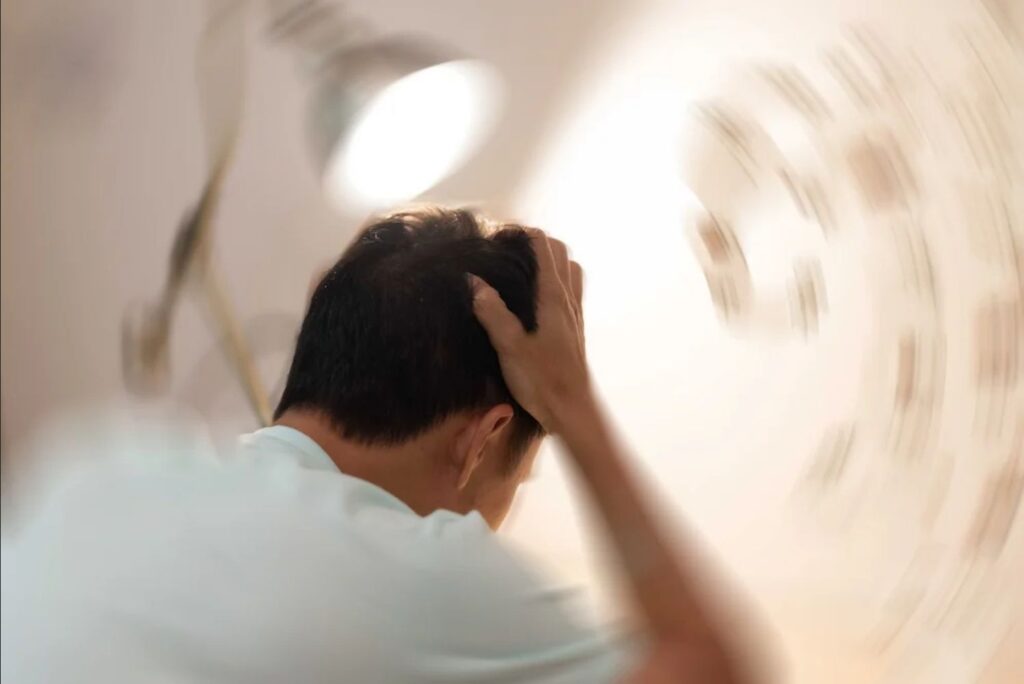
- A sensation of spinning or imbalance
These symptoms may occur even when nothing is visibly wrong in an inner ear exam.
What Research Says About the Neck’s Role in Balance
Studies show that the neck’s sensory input plays a key role in balance and coordination. Changes or impairment in cervical proprioception — how the neck senses position and movement — can disrupt sensorimotor control and contribute to dizziness.
In one review, researchers explained that neck disorders can lead to dizziness because cervical receptors help coordinate head, eye, neck, and body motion through reflex pathways in the nervous system.
Another clinical review found that when dizziness is directly associated with neck pain and limited cervical range of motion, diagnoses consistent with cervicogenic dizziness should be considered after ruling out vestibular causes.
Evidence on Manual and Chiropractic Approaches
While high-quality randomized trials are still limited, some research suggests manual therapy focused on the cervical spine can reduce dizziness symptoms. For example:
- Meta-analyses indicate that manual therapy applied to the upper cervical spine showed a reduction in the intensity and impact of dizziness compared with control groups, though overall evidence certainty is low.
- Some case reports and small studies also demonstrate improved balance and reduced dizziness following targeted spinal care.
Keep in mind that dizziness is multi-factorial — and while the cervical spine may not be the sole cause for everyone, it can be a significant contributing factor that often goes overlooked.
What This Means for You
If your dizziness:
✔ Comes with neck pain or stiffness
✔ Gets worse with head movement
✔ Persists after inner ear treatments
✔ Feels like an imbalance more than spinning
…it’s reasonable to consider that the neck and nervous system could be part of the story.
At Koru Chiropractic, we evaluate posture, spinal alignment, and neurological stress — not just symptoms — to find the root causes that may be contributing to dizziness and balance issues.
Ready for More?
Want to dive deeper into how vertigo connects to the nervous system and what you can do about it? Contact Koru today for your free consultation!