
 Reviews
 Why You Can Still Feel Bad Even When Your Imaging Looks Normal
If you’ve ever been told your MRI, X-rays, or other imaging looked “normal,” but you still feel terrible, you’re not alone. Many patients come into our office frustrated because they have very real symptoms — headaches, neck pain, dizziness, brain fog, tension, fatigue, or poor sleep — yet they’ve been told everything looks fine. While that kind of result can be reassuring in some ways, it does not always explain why you still feel off.
At Koru Chiropractic in Louisville, Colorado, we often meet people who do not need more random treatment — they need a more specific evaluation.
What Does “Normal Imaging” Actually Mean?
When a scan or test is described as normal, that usually means there is no obvious major pathology, fracture, tumor, severe degeneration, or other significant structural abnormality being reported.
That matters.
But it does not always answer questions like:
- Why do I keep getting headaches?
- Why do I still feel dizzy?
- Why does my neck always feel tight?
- Why do I feel like I never fully recovered after an injury?
- Why do I feel terrible even though I’ve been told I’m “fine”?
Those are often functional questions, not just pathology questions.
Function and Pathology Are Not the Same Thing
This is one of the biggest misunderstandings in modern healthcare.
Pathology refers to obvious disease, damage, or abnormal findings that can be seen and labeled. Function refers to how well your body is actually working.
A person can have significant symptoms with minimal obvious pathology. And on the other side, some people can have imaging findings and no symptoms at all.
That is why a normal scan does not automatically mean your body is functioning well.
You may still have:
- abnormal movement patterns
- muscular compensation
- irritation in joints or soft tissues
- altered posture and mechanics
- nervous system stress
- lingering effects from old trauma
Why Symptoms Can Persist Even When Testing Looks Fine
There are several reasons people may continue dealing with symptoms despite “normal” results.
1. Not all problems show up clearly on standard testing
Basic imaging is very good at identifying certain kinds of major problems. It is not always as helpful for understanding subtle mechanical dysfunction, chronic compensation patterns, or how one area may be affecting the rest of the body.
2. The body adapts
The human body is incredibly good at compensating. That sounds like a good thing, but compensation can become its own source of stress over time. You may not feel the original problem as sharply anymore, but you may feel the downstream effects of adaptation.
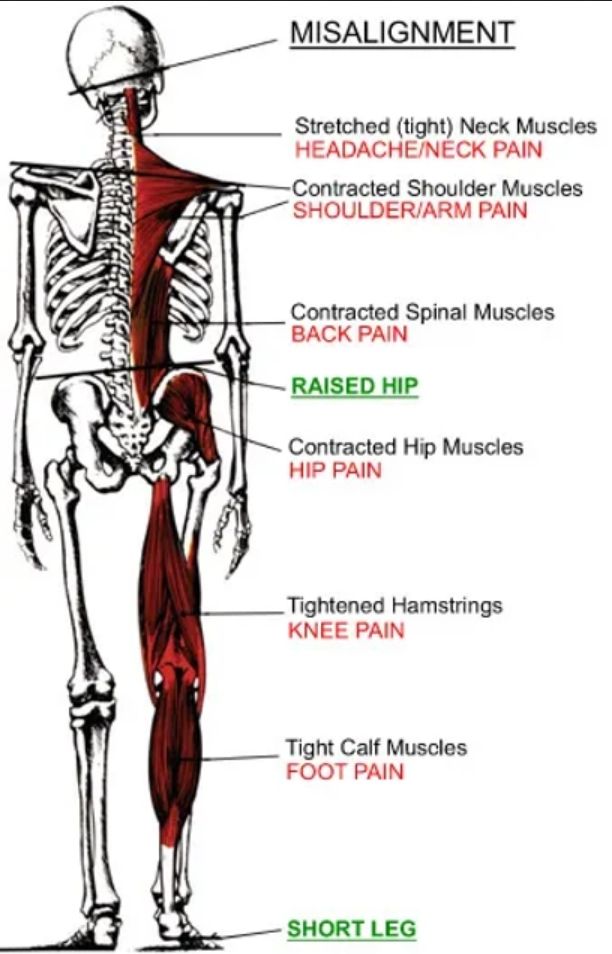
3. The nervous system may be involved
Symptoms like tension, dizziness, headaches, brain fog, and fatigue are not always explained well by basic imaging alone. Sometimes, the bigger issue is how the nervous system is functioning under chronic stress.
Why the Upper Neck Matters
The upper cervical spine — especially the area where the head meets the neck — plays an important role in posture, movement, balance, and neurological communication.
This does not mean every problem comes from the upper neck. But it does mean this region deserves careful attention, especially in people with headaches, dizziness, chronic neck tension, a history of whiplash, concussion, or a sense that they have “never been the same” since an old injury.
A more specific upper cervical and neurological evaluation may help uncover patterns that basic testing did not fully explain.
When a More Complete Evaluation Makes Sense
You may want a more complete structural and neurological evaluation if:
- You have persistent symptoms with no satisfying answers
- You feel dismissed because your tests were normal
- Symptoms started after an injury, but nothing major was found
- You’ve tried multiple approaches and still feel stuck
- You want more than temporary symptom relief
What We Look At at Koru Chiropractic
At Koru Chiropractic in Louisville, Colorado, our process is designed to reduce guesswork. That includes a detailed history, careful examination, and, when clinically appropriate, imaging and analysis to understand whether a structural or neurological pattern may be contributing to your symptoms.
The goal is not to force a diagnosis onto every case. The goal is to understand whether there is a correctable pattern that helps explain why you still do not feel right.
Frequently Asked Questions About Chiropractic Imaging
Yes. A normal MRI may rule out certain major structural problems, but it does not always explain functional issues such as joint irritation, altered mechanics, muscle imbalance, or chronic compensation.
Headaches can be influenced by muscle tension, joint dysfunction, nervous system stress, posture, old injuries, and upper cervical mechanics, none of which are always explained clearly by standard imaging alone.
An upper cervical chiropractor evaluates the relationship between the head, neck, posture, and nervous system, especially in people with headaches, dizziness, neck tension, or post-traumatic patterns.
An upper cervical chiropractor evaluates the relationship between the head, neck, posture, and nervous system, especially in people with headaches, dizziness, neck tension, or post-traumatic patterns.
That is often a sign you may need a more functional, mechanical, and neurological evaluation rather than assuming there is no problem.
If you still have symptoms, still do not have a satisfying explanation, or feel like your case has not been evaluated thoroughly, a second opinion may be worthwhile.
Yes. Some people adapt around old trauma or whiplash patterns over time, and those compensations can continue to affect symptoms long after the original injury.
If you are looking for a more specific structural and neurological evaluation in Louisville, Colorado, Koru Chiropractic may be a good place to start
The Bottom Line
Being told your tests are normal can be reassuring in one sense — but it can also be discouraging if you still feel bad.
The truth is, normal does not always mean optimal. It may simply mean that major pathology was not found. It does not always mean your function is normal, your mechanics are healthy, or your nervous system is adapting well.
If you’ve been stuck in that frustrating gap between “everything looks fine” and “I still don’t feel okay,” you may need a more specific evaluation — not more guesswork.
At Koru Chiropractic, we help patients in Louisville, Colorado, look more closely at the structural and neurological side of unresolved symptoms so they can better understand what is actually going on and what to do next.
References
- Brinjikji W, et al. Systematic Literature Review of Imaging Features of Spinal Degeneration in Asymptomatic Populations. AJNR Am J Neuroradiol. 2015. PubMed.
- Nakashima H, et al. Abnormal findings on magnetic resonance images of the cervical spines in 1211 asymptomatic subjects. Spine. 2015. PubMed.
- Witiw CD, et al. Clinico-Radiographic Discordance: An Evidence-Based Commentary on the Management of Degenerative Cervical Spinal Cord Compression in the Absence of Symptoms of Myelopathy. Global Spine J. 2018. PubMed.
- Evans RW, Burch RC, Frishberg BM, et al. Neuroimaging for Migraine: The American Headache Society Systematic Review and Evidence-Based Guideline. Headache. 2020. PubMed.
- Robbins MS, Grosberg BM. Diagnosis and Management of Headache: A Review. JAMA. 2021. PubMed.
- Reiley AS, et al. How to diagnose cervicogenic dizziness. Arch Physiother. 2017. PubMed.
- Knapstad MK, et al. Clinical characteristics in patients with cervicogenic dizziness: A systematic review. Health Sci Rep. 2019. PubMed.
- Devaraja K. Approach to cervicogenic dizziness: a comprehensive review of its aetiopathology and management. Eur Arch Otorhinolaryngol. 2018. PubMed.
- De Vestel C, et al. Systematic review and meta-analysis of the therapeutic management of patients with cervicogenic dizziness. Physiother Theory Pract. 2022. PubMed.