
 Reviews
 Why Chronic Pain Keeps Coming Back — Even After Treatment
(An educational blog for people tired of short-lived pain relief)
If you’ve ever felt temporary relief after treatment — only for pain to return days or weeks later — you’re not alone. Many people with migraines, neck pain, dizziness, or back pain experience this cycle. Understanding why this happens is the first step toward lasting results.
In this article, we’ll explain:
- The difference between relief and correction
- Why symptoms resurface
- How a neurologically-based corrective approach may help your chronic pain.
Relief vs. Root-Cause Correction
When most people seek care for chronic pain, the goal is comfort. Therapies like massage, stretching, medication, or even general chiropractic adjustments can temporarily reduce pain, tension, or stiffness. However, relief is not the same as correction.
According to healthcare resources, chiropractic adjustments can help reduce pain and improve body alignment, which may allow the nervous system to function more effectively.
Temporary relief doesn’t always address the underlying neurological or biomechanical dysfunction that initially contributed to the pain.
Why Pain Returns: A Nervous System Perspective
The nervous system controls everything in your body, including posture, muscle tone, balance, and pain perception. If the nervous system is still under stress — even after pain decreases — the body often reverts to previous compensatory patterns.
This is especially true in chronic conditions:
- Migraines involve neurological overload, not just pain sensation
- Persistent headaches may relate to upper cervical spine dysfunction
- Repeated pain can stem from how the brainstem and spinal system are functioning
Research on upper cervical chiropractic care, such as NUCCA, suggests that correcting spinal alignment can positively influence symptoms like headaches by improving posture and nervous system communication.
Migraines and Neck Alignment – What Studies Suggest
Several small clinical studies have shown a connection between upper cervical chiropractic care and improvements in migraine symptoms and headaches. For example:
- NUCCA care has been shown to improve pain levels and quality of life in long-time headache sufferers.
- Observational pilot research indicates that atlas realignment — where misalignment at the top of the neck is corrected — may reduce migraine frequency by affecting neurological and vascular systems.
While more research is still needed, the existing literature supports the idea that addressing the upper cervical spine may help with chronic headache and migraine symptoms.
Why Posture and Alignment Matter
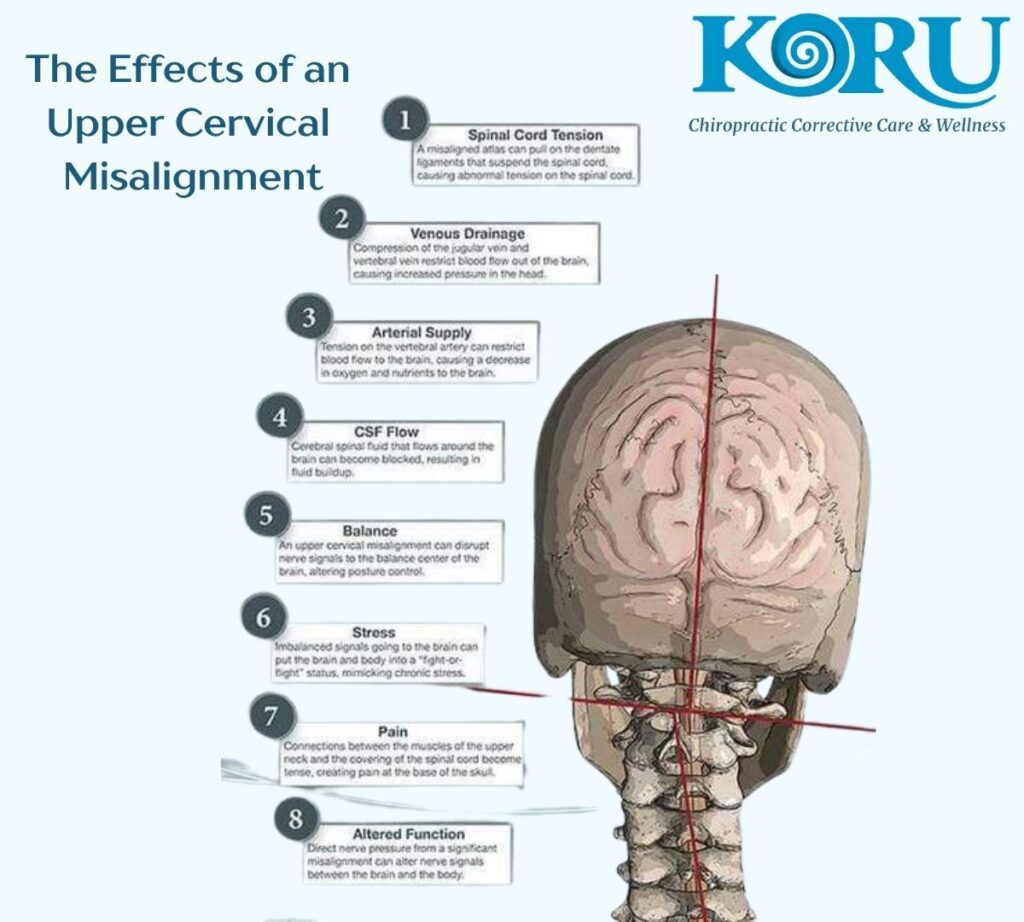
Poor posture isn’t just a cosmetic concern — it can change how your nervous system works. Misalignment in the upper neck affects how the brain communicates with the body, potentially contributing to:
- Pain signals that persist or return
- Muscle tension in the neck and shoulders
- Reduced range of motion
By focusing on spinal alignment and neurological function, corrective care aims to change the pattern, not just suppress the symptom.
Chiropractic: Ongoing Care vs. One-Time Relief
Chiropractic care, particularly corrective models like NUCCA, emphasizes measuring and addressing alignment over time. Research indicates that spinal manipulative treatments can be as effective as other conservative approaches for chronic pain and often form part of practice guidelines for neck pain.
Unlike treatments that offer fleeting relief, a corrective approach:
- Seeks to normalize nervous system function
- Uses precise analysis (often with imaging)
- Avoids forceful, repetitive symptom management
This doesn’t negate short-term relief — but it frames it as a step toward lasting change.
Is This Right for You?
If you find yourself saying any of the following, it may be a sign that symptom relief hasn’t translated into correction:
- “It works — but only for a few days.”
- “I still feel like the problem is deeper.”
- “My pain keeps coming back no matter what I try.”
The goal isn’t to downplay your experience — it’s to help you understand that pain can be a sign of ongoing neurological stress or structural imbalance, not just tissue irritation.
Conclusion
Pain that keeps returning isn’t a personal failure — it’s a signal.
It’s the body’s way of communicating that the underlying pattern causing the symptom hasn’t fully resolved.
By addressing both alignment and neurological influence, you give your body a chance to move beyond temporary relief and toward lasting improvement.
If you’re ready to explore the root cause rather than manage symptoms, that’s exactly what Koru Chiropractic specializes in — gentle, corrective care grounded in nervous system and spinal health analysis.